Locksmith in Glen Burnie, MD
Lockouts opened, car keys cut and programmed, locks rekeyed. Plus the one check Maryland gives you that most states do not — a public licence register you can search before anyone arrives.
Three calls, three different jobs
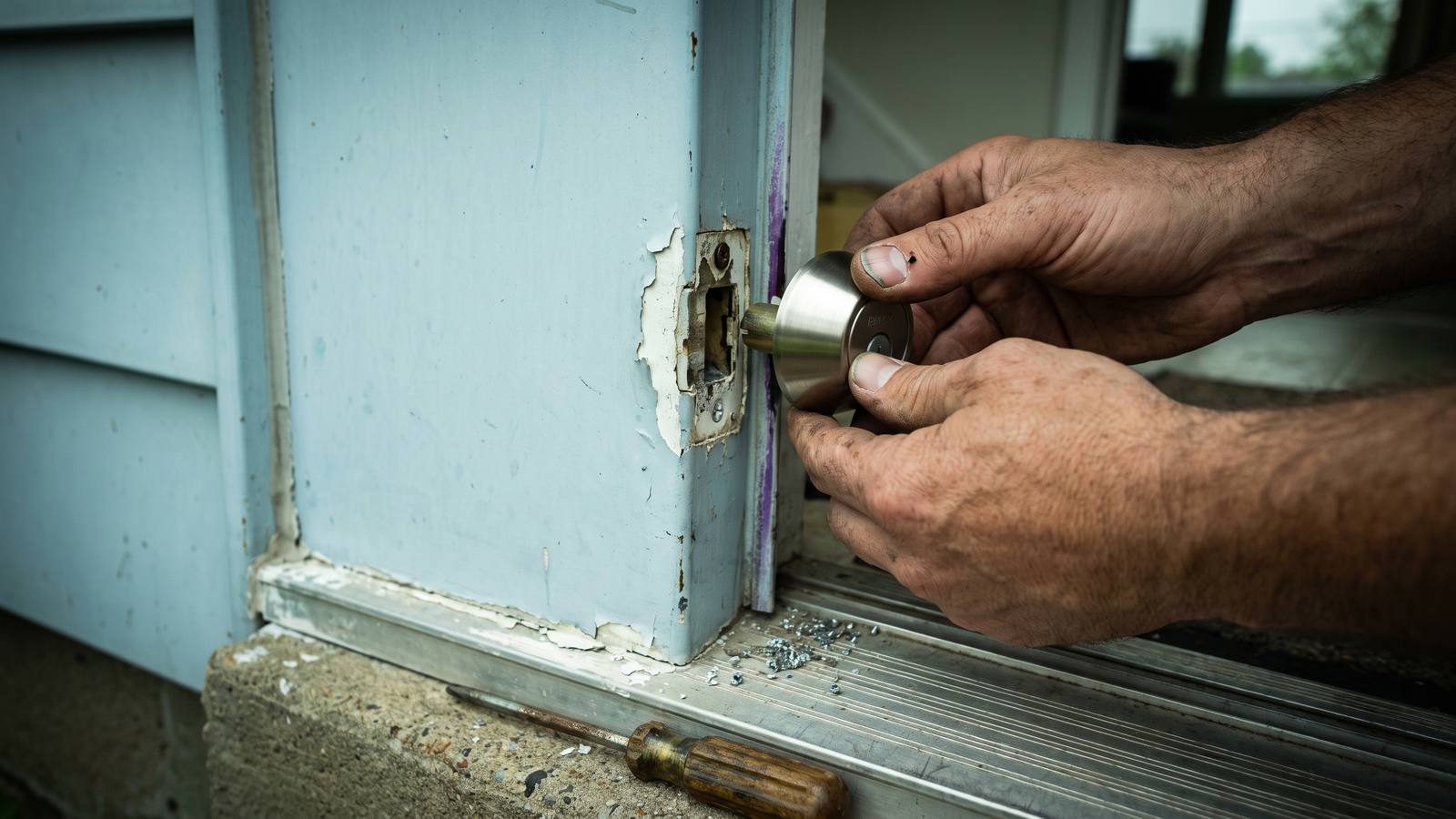
Keys shut inside a running car at the Cromwell park-and-ride, twenty minutes before the light rail gets someone to work. A house key sheared off in a deadbolt on a Harundale rancher where the frame is welded steel and the lock has not moved freely since spring. A tenant gone from a Ferndale duplex with no clear account of how many copies of the key exist.
Those are three different trucks, three different kits and three different prices, and the only thing they share is that the caller wants someone now. What separates a fast job from a wasted visit is almost never the lock. It is whether the person on the phone knew what to say.
One case is not a locksmith call. A child or a pet shut inside a closed vehicle is a 911 call, every time, and especially between June and September when the inside of a car parked on the Ritchie Highway asphalt climbs far faster than people expect. Emergency services open it free and they get there first. Call them, then worry about the key.
Locksmith work in Glen Burnie
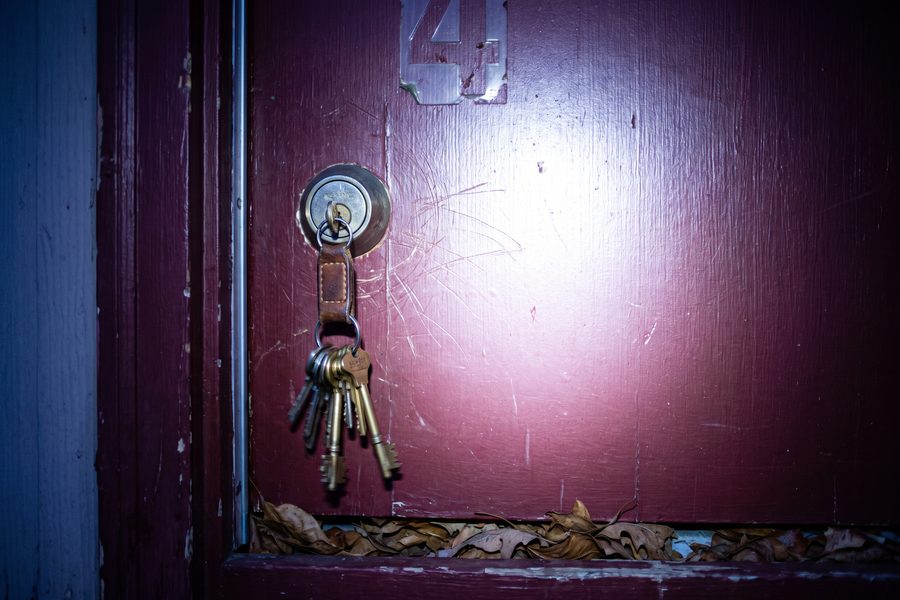
Lockouts, any hour
Cars, houses and apartments. What to check before anyone is dispatched, and the one case that is a 911 call instead.
Read more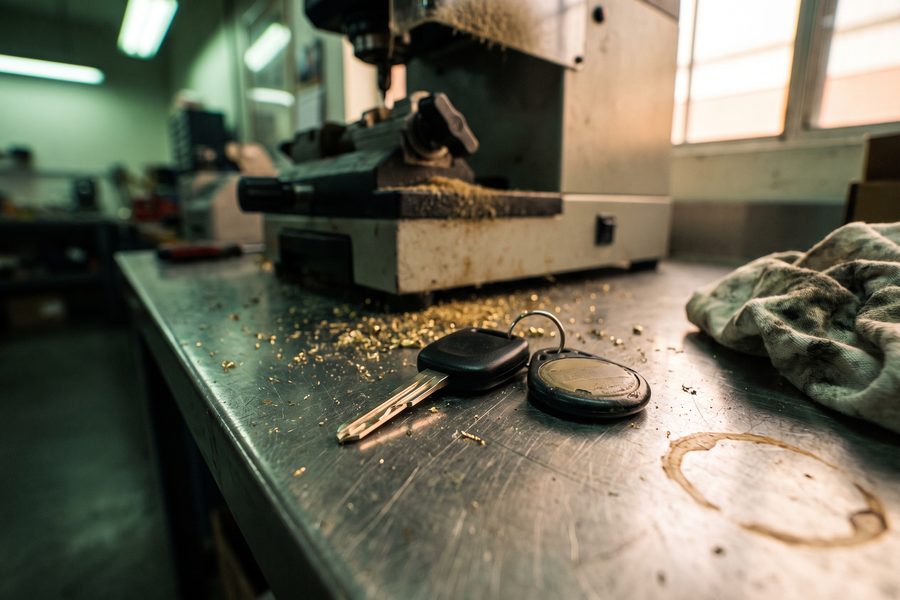
Car keys and fobs
Transponder keys, proximity fobs and push-to-start, cut and programmed at the vehicle.
Read more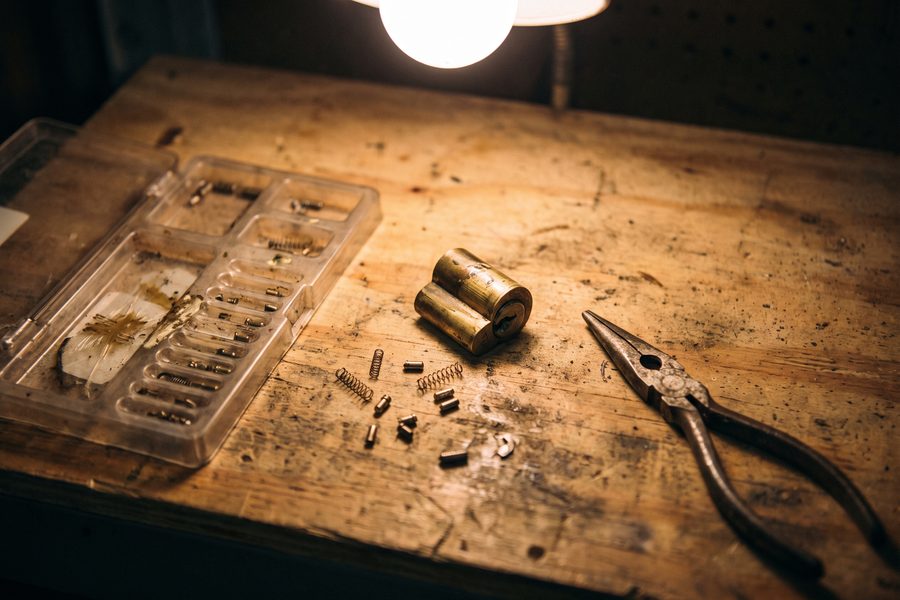
Homes and businesses
Rekeying on turnover, deadbolts, storm doors, smart locks, storefront hardware and master keying.
Read more
Costs and checks
What actually moves the number on a locksmith bill, and how to search the Maryland licence register.
Read moreMaryland gives you a check most states do not
Maryland licenses locksmiths at the state level. The Department of Labor runs a Locksmith Licensing Program under its Division of Occupational and Professional Licensing, the business itself must hold a licence, and every employee who performs the work must be registered under it. The licence covers repairing, rebuilding, rekeying, repinning, recombinating, adjusting and installing locking devices, safes and vaults — which is to say, nearly everything a locksmith does to a door.
Three requirements sit behind that licence, and each one is something a caller can actually use. Applicants and employees are fingerprinted through the Criminal Justice Information Systems Repository. The business has to carry general liability insurance of at least three hundred thousand dollars. And every employee must be issued a photo identification card carrying a passport-sized photograph, the licence number and the expiry date.
That last one is the practical one. The card is meant to be shown. Asking to see it at the door is a normal, expected request, not an awkward one, and a technician working under a real licence will have it on them. The licence runs for a two-year period and has to be renewed before it expires, so the date on the card is worth a glance.
The honest limit is worth stating too: Maryland requires no prior experience to become a licensed locksmith. So the licence is not a skill certificate. What it proves is that someone cleared a criminal background check, carries insurance, and can be identified and found afterwards. Those are exactly the things that matter when a stranger is standing at an open door — and they are exactly what the bait-and-switch operators working this corridor cannot produce.
How to use it is on the costs and checks page, along with what actually moves the number on a locksmith bill.
Why the housing stock here changes the job
Glen Burnie is not old-Baltimore rowhouse and it is not new construction. A great deal of it went up in one burst after the Second World War, and that burst still decides what is behind the door.
Harundale is the clearest example. The Byrne Organization began it in 1947 on a three-hundred-acre site with its own prefabrication shop, and put up roughly twelve hundred homes — one of the largest prefabricated housing projects in the country at the time, and the start of Anne Arundel County turning from farmland into suburb. The houses were built on welded steel frames, set on concrete slabs, with plaster interior walls and in-floor radiant heat.
Steel framing is the part that matters to a lock. A deadbolt strike in a wood jamb is anchored with long screws driven into a stud behind it, and that is what stops a door being kicked in. A steel-framed opening does not offer that stud, so the strike has to be anchored into the frame itself, and the hardware and the fixings both have to suit it. Slab construction matters at the threshold: no crawl space underneath means doors sit closer to a surface that moves with frost and heat, and a door that binds in February and swings free in July is usually telling you about the slab, not the cylinder.
The rest follows from age. Original hardware in those homes is approaching eighty years old. Much of it has been changed once or twice by different hands, which is how a single house ends up with three brands of cylinder and four keys. Harundale was also split from the start — the western section largely rental, the eastern owner-occupied — and that split is still why rekeying on tenant turnover is steady work across this part of the county.
Glen Burnie and the communities around it
Glen Burnie is a census-designated place in Anne Arundel County, suburban Baltimore, across ZIP codes 21060 and 21061. It is not an incorporated city, which is why so much of what governs work here is county and state rather than municipal.
The road grid explains the service area better than a radius does. Governor Ritchie Highway, Maryland Route 2, has been the main commercial spine since 1939 and still carries most of the retail and most of the shared parking. Robert Crain Highway, Route 3, dates from 1927. Interstate 97 arrived in the 1980s and made Glen Burnie a genuine midpoint between Baltimore and Annapolis. Baltimore’s Light RailLink stops at Ferndale and terminates at Cromwell/Glen Burnie, and the park-and-ride lot at that terminus produces a particular kind of call — keys locked in a car that has been sitting since the morning train, discovered at dusk.
BWI Marshall sits just north, which adds its own pattern: long-stay parking, a key that travelled to another state in someone’s pocket, and a car that has to move now.
Work runs through Glen Burnie itself and out to Ferndale, Brooklyn Park, Linthicum Heights, Pasadena, Severna Park, Millersville, Severn and Hanover.
Frequently asked
Does Maryland require a locksmith licence?
Yes. Maryland licenses locksmiths at the state level through the Department of Labor’s Locksmith Licensing Program. The business must hold a licence and every employee performing the work must be registered under it.
Employees are issued a photo ID card showing the licence number and expiry date, and the state keeps a searchable register. Asking to see the card at the door is a normal request. The costs and checks page covers how to search the register.
Is there a locksmith in Glen Burnie, Maryland?
Yes. Glen Burnie is served by both storefront and mobile locksmiths working across Anne Arundel County.
Most of the work here is mobile by necessity — a car locked in the Cromwell park-and-ride lot or a key snapped off in a front door cannot travel to a counter. What matters more than the address is whether the licence is current and the technician can show the state-issued photo card.
What locks can locksmiths not open?
A few genuinely fall outside the trade. High-security safes with glass relockers, some electronic safes still under manufacturer warranty, and certain automotive immobiliser systems are cases where the manufacturer or dealer is the right call.
The more common answer is different: a locksmith will not open a lock for someone who cannot show a right to be there. Expect to be asked for identification and for something linking you to the address or the vehicle. That request is the trade working properly.
How much does a local locksmith charge?
There is no single rate, and any site that gives you one is quoting a call-out fee rather than a job price.
What actually moves the number: the hour, the distance travelled, whether the job is cutting, programming or both, and whether parts are involved. The honest way to get a figure is to give the specifics on the phone and ask for the full total before anyone is dispatched. The costs and checks page breaks down each factor.
How fast can someone get here?
It depends on where the nearest available technician is and what the job needs. The useful thing to ask for is a realistic window rather than a number someone wants to hear.
Be wary of an unusually low quote paired with an unusually fast promise. That pairing is the standard shape of a bait-and-switch: the figure on the phone is not the figure at the door. A firm total agreed before dispatch is the protection, and in Maryland the licence register is the second one.
Tell the phone three things and the right call goes out
Most wasted visits come from a single missing detail. These three sort the job before anyone leaves.
- Where you are. A street and cross street, or the lot and level. Glen Burnie has several large shared lots — Harundale Plaza, the Cromwell light rail park-and-ride, the Ritchie Highway strips — and naming the wrong one costs twenty minutes.
- What is locked. A car, a house door, a storm door, a safe, a mailbox or a storefront. Each one sends a different kit.
- For a vehicle: year, make, model, and whether the key is a metal blade, a fob with buttons, or push-to-start. That decides whether the job is cutting, programming, or both.